




Chicago Latino Film Festival Announces North American and U.S. Premieres
The 42nd Chicago Latino Film Festival announced today that of its 51 feature films, Nine are North American Premieres and five are U.S. Premieres.
Highlights include:
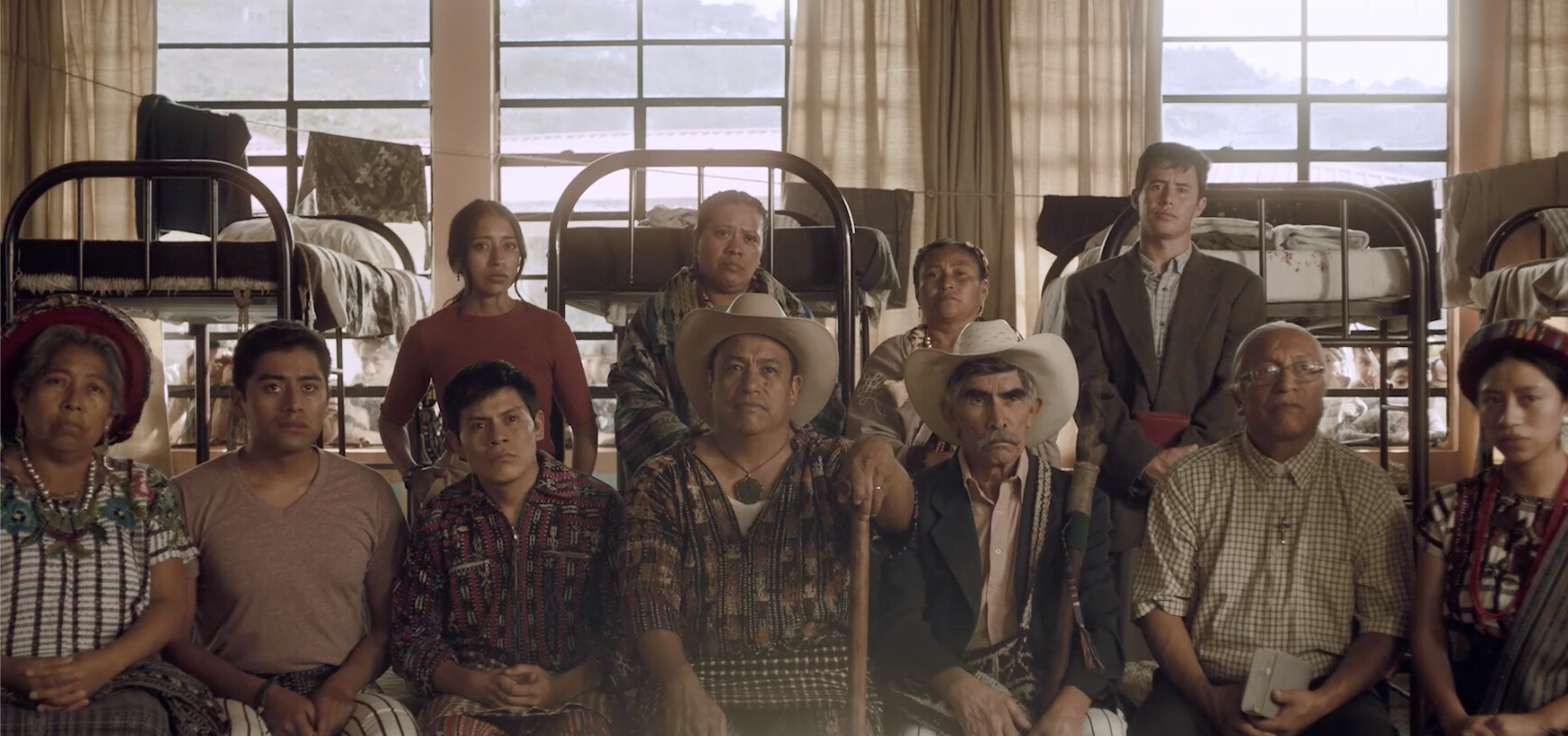
- Acclaimed Guatemalan director Jayro Bustamante’s (Ixcanul, La Llorona) brand new film, Cordillera de fuego, about two indigenous volcanologists trying to save their communities from an impending disaster.
- Death of a Comedian, Argentinean actor Diego Peretti’s directorial debut about an ailing actor who travels to Brussels in search of his favorite comic book writer and becomes embroiled in an adventure right out of his books.
Here is a recent chat with Peretti about his debut…
- Noviembre, Tomás Corredor’s claustrophobic feature debut about the takeover of the Palace of Justice by the M-19 guerrilla group on November 6, 1985 and its bloody aftermath.
- The sci-fi psychological thriller Borealis about a solar flare that wipes out all human memory from Heixan Robles, another entry from Puerto Rico’s vibrant independent filmmaking scene.
See below for the full list of premieres with their respective status and synopsis.
The 42nd Chicago Latino Film Festival will present 51 features and 31 shorts exclusively, including Opening and Closing Night, at the Landmark Century Centre Cinemas, 2828 N. Clark St., April 16-27.
The Festival previously announced the Opening Night selection of Mariana Rondón’s and Marité Ugás’s dystopic vision of modern day Venezuela It Would Be Night in Caracas (Aún es de noche en Caracas), Thursday, April 16 and the Closing Night selection of the Ecuadorean comedy The Dog, My Father and Us (Nosotros, mi papá y el perro) from director Pablo Arturo Suárez, Monday, April 27.
Festival passes (or passports) worth 10 admissions are currently at the bargain rate of $110, a $70 savings over the regular ticket price of $17. This special pre-festival sale ends on March 26. After that, they go back to the regular price of $140.
Tickets to each regular screening are: $17, general admission; $15 (with valid ID), ILCC members, students and seniors. Monday and Tuesday night specials at the Landmark Century Centre Cinema: all films, $12.
Applications for Media Credentials close on April 6.
For more information visit chicagolatinofilmfestival.org.
ABOUT THE PREMIERES (IN ORDER BY COUNTRY)
North American
- Five Kinds of Fear/Cinco Tipos de Medo (Brazil; Director: Bruno Bini): Murilo, a grieving violinist falls in love with Marlene, a nurse trapped in an abusive relationship with Sapinho, a violent drug dealer. Sapinho is arrested by Luciana, a policewoman driven by a desire for revenge. Ivan, a lawyer, faces a moral dilemma when he accepts to defend Sapinho at the request of Dona Antonia, a community leader who sees the drug dealer as the only person capable of providing security to the residents of the neighborhood. Their lives collide, setting them on a dangerous path.
- Isla Negra (Chile; Director: Jorge Riquelme Serrano): Guillermo (Alfredo Castro) and his assistant Carmen (Paulina Urrutia) spend a weekend overseeing the final stages of a large real estate project in Isla Negra, the seaside resort where Pablo Neruda spent his final days. Their tranquility is disrupted by the unexpected arrival of a homeless family, who pitch a tent right outside their home. Their presence triggers a conflict that reveals deep political and social differences between them. As tensions rise, the characters are forced to confront their own contradictions in a power struggle that exposes the stark divides of contemporary Chilean society.
Here is your first look at Isla Negra…
- Enough Mom!/¡Basta mamá! (Colombia; Director: Flora Martínez): After capturing the hearts of our audiences two years ago with Itzia, Tango y Cacao, Flora Martínez returns to our festival with this delightful comedy about overbearing mothers. Fernando is 45 years old, has a good job, and a secret that doesn’t fit on his resume: he still lives with his mother, Victoria, who cares for him with a love so immense it stifles him. Fernando invites Leticia—his girlfriend and, to make matters worse, his boss—to dinner so the two women can meet for the first time. What begins as a cordial dinner turns into a full-blown battle of hints, jealousy, and untouched dishes.
- Cordillera de fuego (Guatemala; Director: Jayro Bustamante): A new volcano is forming in Guatemala’s Cordillera de Fuego, presenting new business opportunities to the government and the private interests it’s beholden to. For the endangered indigenous communities living there, the active volcano means losing their homes and way of life. Two dedicated volcanologists are determined to fight corruption in order to evacuate at-risk communities and bring them to safety. Bustamante’s new film is the result of a project spearheaded by the Ixchel Project, funded by the UK government’s Global Challenges Research Fund (GCRF) and the Scottish Funding Council to explore the multifaceted nature of volcanic disasters in Guatemala.
- Eva (Honduras/Colombia; Director: William Reyes): Eva, a trans woman, takes on the care of her granddaughter after the sudden death of her daughter-in-law. While processing her grief, she tries to help her son connect emotionally with the baby. Amid tensions, reproaches, and silence, mother and son embark on a path toward mutual understanding and the reconstruction of their family bond. In his feature debut, Reyes blends a naturalist aesthetic with an intimate approach to the story and lived-in performances to offer a powerful reflection on embracing one’s destiny while reconfiguring family roles beyond social norms.
- Life Is/La vida es (Mexico; Director: Lorena Villareal): Nora is about to turn 40 and can’t stop wondering: what’s the point of it all? With open wounds, unspoken desires, and a past that still hurts, Nora must confront her family history, grief, unemployment, the collapse of her polyamorous relationship, and the urgent need to redefine love, her sexuality, and what she truly wants out of life. What was meant to be a weekend celebration with best friend Ely unravels into a series of unfortunate missteps that push her toward self-discovery.
- About Astronauts and Ghosts/De astronautas y fantasmas (Paraguay/Chile; Director: Luis R. Vera): Three generations of one family and a house that stands as a metaphor for a country’s past and its present. A grandfather who claims to have the ability to see the ghosts of Paraguay’s past conflicts, from its fight for independence in 1811, 1935’s Chaco War and Stroessner’s brutal dictatorship. A granddaughter in love with a delivery boy. A mother forced to migrate to Spain to keep her family afloat. Vera’s new film expertly mixes the realities of the young taking care of the old while facing a future without hope.
- De tal palo (Puerto Rico; Director: Iván Dariel Ortiz): When his daughter is brutally beaten by her husband, Manuel (José Félix Gómez) takes on the temporary custody of his estranged nine-year-old granddaughter Irene. To make matters worse, Manuel hasn’t been feeling quite himself lately. Diagnosed with early onset of Alzheimer’s, Manuel finds, through art and photography, the vehicle to open and strengthen links with his granddaughter leading to a loving and independent relationship. Manuel is forced to make some hard choices as social service workers begin to question if Manuel is the right person to take care of Irene.
- The Whisper/El susurro (Uruguay/Argentina; Director: Gustavo Ibáñez Fernández): Fleeing from their violent father, siblings Lucía and Adrián take refuge in a remote mansion. With the help of a hidden micro-camera on a cat, Lucía uncovers a terrifying secret: their neighbors are part of a criminal network that kidnaps teenage girls to make snuff films, and they intend to get rid of the siblings. That is just the beginning; Hernández Ibáñez (The Silent House) throws children with supernatural powers, vampires and even a bit of folk horror into the mix, delivering a frightening film that is not for the faint of heart.
United States
Borealis (Puerto Rico; Director: Heixán Robles): Director of photography Heixan Robles (Bella, 23 Horas) makes his directorial debut with this sci-fi psychological thriller about identity, loss, and the power we hold to reclaim who we are. After a solar flare wipes out all human memory, Thalía wakes up with no sense of who she is but for one clue: a C-section scar. She sets out in search of her missing child. As new leaders rise from the chaos, Thalía must choose whether to confront the only person who claims to remember everything… or redefine her own truth.
Death of a Comedian/La muerte de un comediante (Argentina; Directors: Diego Peretti and Javier Beltramino): Financed through a massive crowdfunding campaign that totalled over 10,000 microinvestors, actor Diego Peretti’s (Lucía Puenzo’s The German Doctor) and Javier Beltramino’s directorial debut centers on Juan Debré, an actor who has spent a lifetime playing the lead role in a popular TV series. Diagnosed with a terminal illness, Debré drops everything, including an upcoming film shoot, and travels to Brussels where he embarks on an adventure that seems to come straight out of one of the graphic novels written and drawn by his favorite comic book artist, Monsieur Bickel.
Writer/Escritor (Argentina; Director: Paula de Luque): In 1955, a civil-military coalition under the name “Revolución Libertadora,” overthrew the constitutional government of Juan Domingo Perón, replacing him with not one but two dictators. A year later, the dictatorship executed a group of civilians and soldiers suspected of organizing a coup. A young translator, Rodolfo Walsh, receives news that someone survived the massacre, and sets out on a dangerous quest for the truth, leading to the publication of one of history’s first non-fiction novels, Operation Massacre, years before Truman Capote wrote In Cold Blood.
Noviembre (Colombia/Brazil/Mexico/Norway; Director: Tomás Corredor): Tomás Corredor’s claustrophobic feature debut tackles one of the darkest chapters of Colombia’s recent political history: the takeover of the Palace of Justice by the M-19 guerrilla group on November 6, 1985 and its bloody aftermath. The action takes place inside a bathroom where a group of 70 judges, civilians and office workers are being held hostage by members of the guerrilla group. They represent a nation divided. The tension in this enclosed space is palpable as tanks and soldiers blast their way into the building.
1938: When Mexico Recovered Its Oil/1938: Cuando el petróleo fue nuestro (Mexico; Director: Sergio Olhovich): Lázaro Cárdenas (Ianis Guerrero, Club de cuervos) faces the toughest decision of his presidency: the expropriation of British and U.S. oil companies, an idea that obviously doesn’t sit well with them. The multi-million dollar compensation Mexico will have to pay these companies makes the decision that much harder to make. Featuring an all-star cast that includes Sergio Bonilla, Raúl Briones and Ofelia Medina as the narrator, this Festival presentation of Olhovich’s new film marks the end of a project that took over 20 years to complete.
Be sure to check back here at SCREEN Magazine for more exclusive news and interviews. You can also click right here to subscribe to our weekly email newsletter.
Related Articles



About Post Author


